Input quality matters
A different birth time or birthplace can change the chart. If you are unsure, treat the result as a loose reflection rather than a precise reading.
How it works
DaoReader keeps the reading flow direct: gather accurate inputs, calculate the chart, generate the report after checkout, and make the result easy to revisit with clear responsible-use boundaries.
01
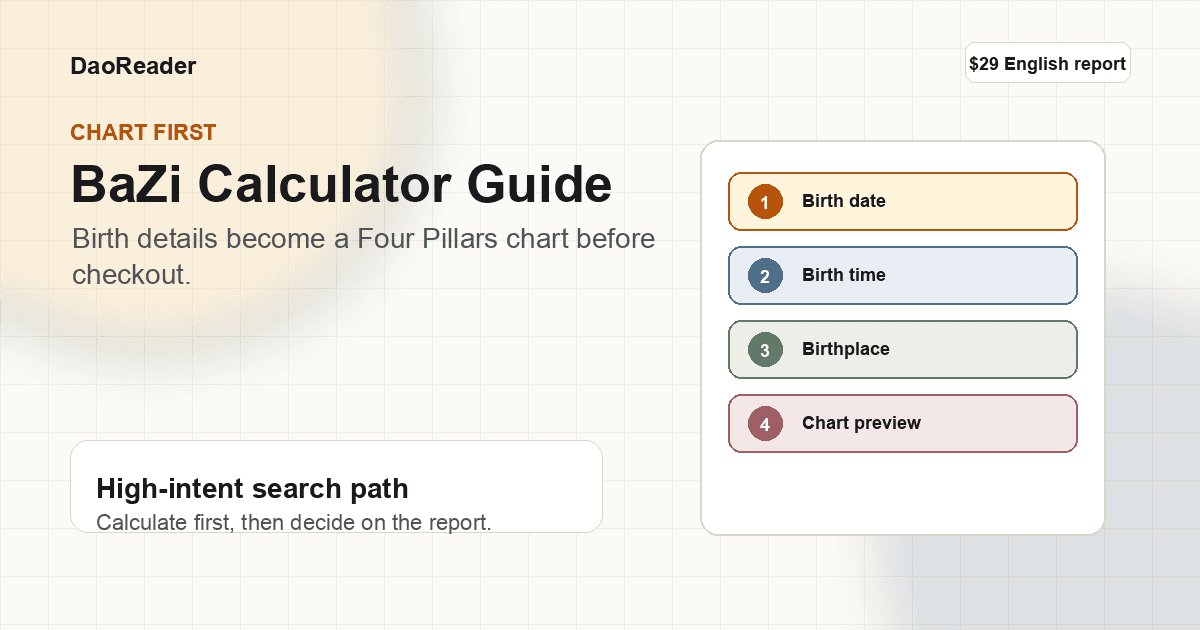
Provide birth date, birth time, and birthplace so the chart can account for local time context before any report is created.
02
DaoReader calculates the Four Pillars and prepares the chart structure, giving you a chance to notice whether the inputs look right.
03
Checkout starts only after the birth details are submitted, keeping the paid report tied to one specific chart input.
04
Generated readings appear in the dashboard, where you can revisit the report sections after signing in.
05
Use the prompts for journaling, planning language, or conversation, without treating the reading as an instruction.
A different birth time or birthplace can change the chart. If you are unsure, treat the result as a loose reflection rather than a precise reading.
The report depends on the chart you submit before payment. Editing details later means starting a separate chart flow.
Timing sections describe symbolic themes for reflection. They do not promise events, compatibility, income, recovery, or safety outcomes.
Responsible use
BaZi can be a useful symbolic framework for thinking about temperament, recurring patterns, and timing themes. DaoReader presents those ideas as context for reflection, with explicit boundaries around professional decisions, personal wellbeing, and choices that require qualified support.
Next step
The strongest conversion path is not one page. Use the report preview, use-case boundaries, and calculator guide to decide whether the paid report is useful.
Start with birth details, review the chart context, and continue only when it feels right.